
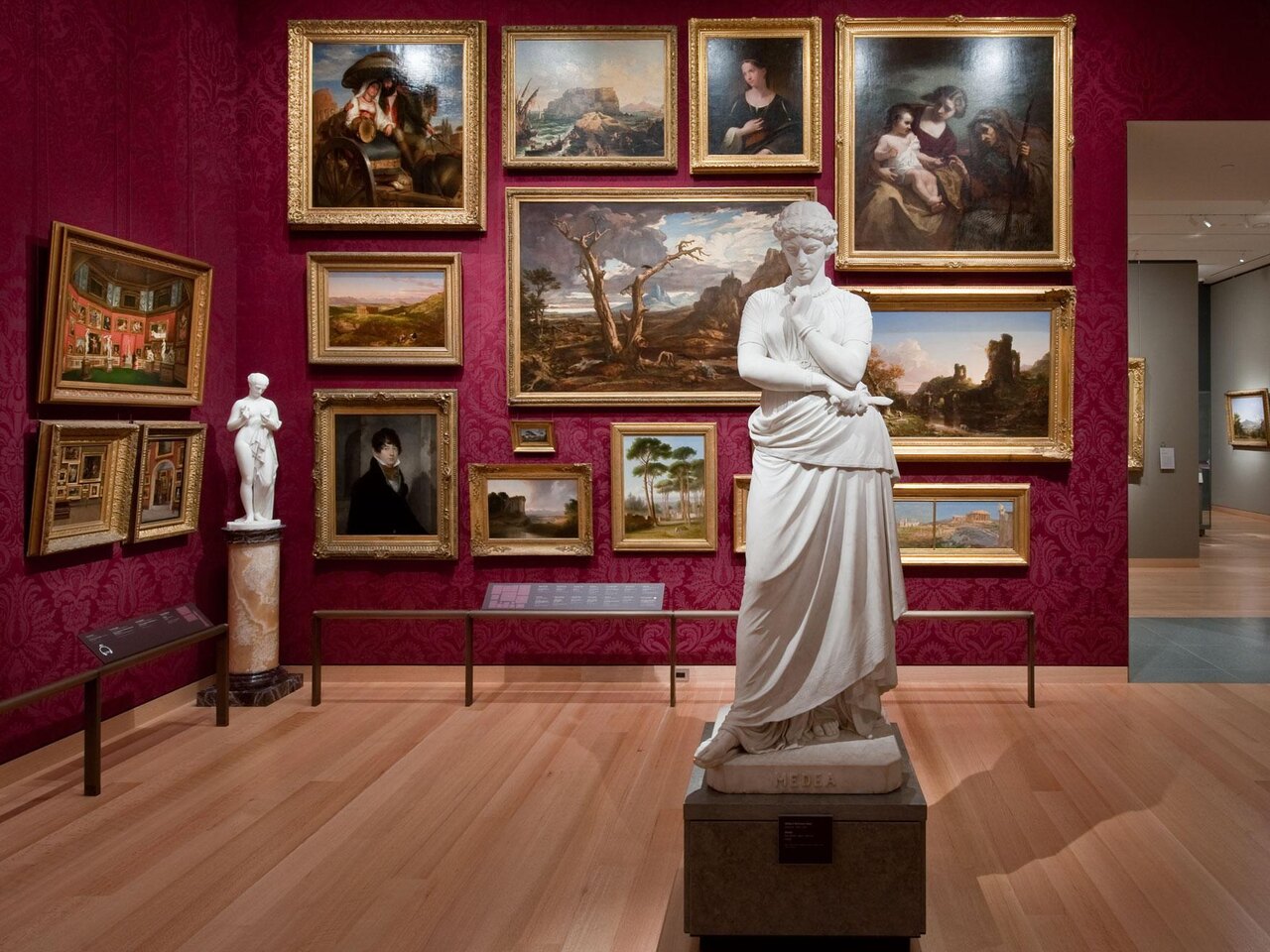
Parents who hear the word classical sometimes picture something dusty — togas, dead languages, memorization for its own sake. The reality is nearly the opposite. Classical education is not a museum piece; it is the oldest and most thoroughly tested model of learning we have — the one that formed the minds behind the Western tradition, from the philosophers of Greece to the founders of America. A classical school simply recovers what schooling was for most of its history, and asks the question modern education often skips: not only what should a child know, but who should a child become?
The seven liberal arts
At the center of the tradition stand the seven liberal arts — the course of study that shaped the medieval university and reaches back to the academies of antiquity. They fall into two groups. The first, the trivium, is made of the three arts of language: grammar, logic, and rhetoric. The second, the quadrivium, is made of the four mathematical arts: arithmetic, geometry, music, and astronomy. They were called liberal — from the Latin liber, "free" — because they were the studies that formed a free person, fit to think and to live well, rather than merely to earn a wage.
The trivium: the tools of learning
The trivium is the heart of a classical education, and it follows the way a young mind naturally matures. Grammar is the foundation — the facts, vocabulary, and building blocks of a subject, which children absorb and memorize with surprising delight. Logic comes next — learning how ideas fit together, how to reason, to question, and to tell a sound argument from a hollow one. Rhetoric crowns the three — learning to express what is true with clarity, beauty, and persuasion, in writing and in speech.
This is also why classical schools teach Latin, and often Greek. They are the roots of English and of the great books of the West, and few studies train a mind so well. A student who has wrestled with their grammar reasons and writes more clearly in every other subject for the rest of his life.
The great conversation
A classical school feeds students on the best that has been thought, written, composed, and made — not the disposable, but the enduring. They read the great books, beginning with the Bible; they hear the great music; they study the great works of art. And they learn to read actively: a great book is approached as a living conversation with its author, who answers the student who has learned to ask good questions. The aim is a graduate with a broad and deep foundation — one who can read, write, reason, and speak well, and who has learned to love what is good, true, and beautiful.
Formation, not just information
The word education comes from the Latin educare — to lead out, to draw a person up into the light. That captures the whole point. Classical education is not first about credentials, test scores, or job training. Those may follow, but they are not the goal; the goal is the student himself — to make a young person wiser, deeper, and more fully alive on the inside. The philosopher Peter Kreeft memorably calls a classical education "a truth-seeking missile." It exists to form wisdom and virtue, not merely to transfer facts.
"The goal was never merely information. It is formation — wisdom, and the virtue to use it well."
Why classical and Christian belong together
Classical and Christian are not two ideas bolted together; they complete one another. Christianity has always honored the mind as part of the image of God, the world as the work of a reasonable Maker, and words themselves as a reflection of the Word — "In the beginning was the Word." A discipline devoted to seeking truth wherever it leads has every reason to expect to find, at the end of the search, the Author of all truth. Christ is the capstone that gives every other subject its place and meaning — grammar and mathematics, history and music all find their order under Him. That is why our aim is not only to cultivate sharp minds, but to form lifelong learners who are also lifelong followers of Jesus.
This is the education Awakening Christian Academy was built to offer: a Christ-centered, creative, classical school for grades 3 through 12, forming students in wisdom, wonder, and virtue. It is, in some ways, countercultural. We think that is precisely the point.